


Social

- Enriching housing and lifestyles for more people
- Financial inclusion
- Customer first
- Community initiatives
- Distributing information through owned media
- ARUHI Awards, short film
- Social contribution activity through “Orange Ribbon Campaign”
- Building a friendly and rewarding workplace that empowers all employees
- SBI ARUHI’s Human Rights Initiatives
Enriching housing and lifestyles for more people
Life is made up of a series of “ARUHI” (Japanese for “one day”).
SBI ARUHI works to help customers, people in the community, business partners and colleagues
working at SBI ARUHI to have a best "One day(ARUHI)" possible.
Financial inclusion
SBI ARUHI enriches the housing and lifestyles of more people through products such as "Flat 35" provided in partnership with the Japan Housing Finance Agency.
"Flat 35" (*1) is a housing loan provided by the Japan Housing Finance Agency for the purpose of stable supply of long-term fixed-interest housing funds universally throughout Japan.
- Persons aged less than 70 at the time of application (applications can also be made at the age of 70 or higher for loans repaid over two generations)
- Japanese citizens, permanent residents, special permanent residents
-
Persons who satisfy the criteria in the following table for the percentage of annual income used for total annual repayments of all loans (*) (total repayment burden rate) (income may be combined in some cases)
Annual income Less than 4 million yen 4 million yen or more Criterion 30% or lower 35% or lower - * In addition to , housing loans other than "Flat 35", car loans, education loans, card loans (including credit card cashing, installment payments for products, and purchases using revolving payments) (including the portion of combined income earner). Also includes loans for housing to be leased or currently being leased (if the loan is a loan for a rental apartment (loan is for an entire apartment building or dormitory building), this is not included in loans).
- If the housing subject to the loan or the site thereof is jointly owned, the person applying is required to have a co-ownership interest.
Furthermore, applications may be made in the following cases.
- If the borrower has recently started a business and a certain period has elapsed
- If on childcare leave, maternity leave or family care leave at the time of the application
- * However, continuity of income is checked.
(as of October 2021)
If stable income can be expected based on the above requirements specified by the Japan Housing Finance Agency, SBI ARUHI accepts applications without restrictions on the form of employment or years of employment, and provides loans with the approval of the Japan Housing Finance Agency after performing adequate reviews of the certainty of repayment. Through this initiative, we aim to realize a society in which more people can affluently live how they wish.
- *1 It cannot be used for funding the acquisition of investment properties such as properties to be leased to third parties.
Childrearing support (to address low birthrate)
"Flat 35" for childrearing families ("Flat 35" Childrearing Support Plus)
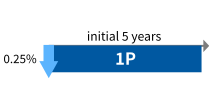
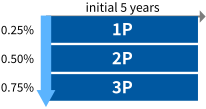
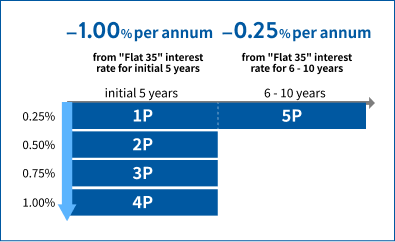
SBI ARUHI offers "Flat 35" Childrearing Support Plus, the Japan Housing Finance Agency's program that provides reduced interest rates for a set initial period depending on the number of children and other factors.Under this program, points are accumulated based on the number of children and other factors, according to which the interest rate on "Flat 35" is lowered.
"Flat 35" Childrearing Support Plus accounts for approximately 60% of the Company’s "Flat 35" loan execution volume in FY2025.
The Company is working with the Japan Housing Finance Agency to reduce the burdens of childrearing families and young couples and help them purchase homes, thus contributing to addressing the falling birth rate.
Overview of "Flat 35" Childrearing Support Plus

 for young couples*1
and households with 1 child*2
from "Flat 35" interest rate for initial 5 years
 for households
with 3 children*2
from "Flat 35" interest rate for initial 5 years
- *1Applicants should be married (including same-sex partners) at the time of loan application and one of the couple should be under 40 years of age as of April 1 in the fiscal year of loan application.
- *2This applies to children under 18 years of age (including fetuses and grandchildren, provided that the grandchildren reside in the applicant's household) as of April 1 in the fiscal year of loan application.
Can be combined with other options that provide reduced interest rates
- 1point for "Flat 35" Childrearing Support Plus
- 2point for "Flat 35" S (ZEH)
- 3point for "Flat 35" Maintenance program
Customer first
SBI ARUHI believes that improving customer satisfaction is one of its most important management issues. We define "customers" not only as users in our core housing loan business but also as a wide range of stakeholders, including business partners, local communities and employees. Based on this definition, we are engaged in company-wide efforts to improve overall customer satisfaction.
Community initiatives
Starting school life, working as an adult member of society, living with family, having children, enjoying old age...
SBI ARUHI provides housing loans to match diverse customers’ needs and services that support each life stage. Furthermore, we are engaged in the vitalization of local communities by using information and know-how on housing and living, and contribute to the lives and the businesses promotion of our stakeholders.
“Livable Community Awards” initiatives
Holding events
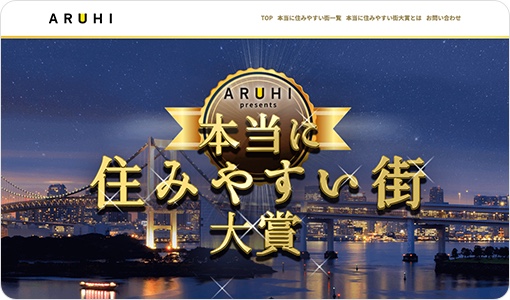
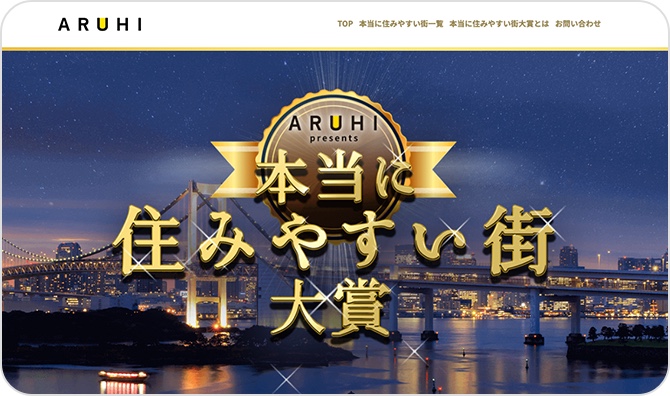
Using the wealth of data obtained by SBI ARUHI through the housing loan business, a selection committee made up of experts on housing and real estate selects and announces a ranking of the “most livable communities” every year through a fair review of five criteria of living environment, transportation convenience, educational environment, cost performance and potential development from the perspective of “actually living in the region” rather than admiration or image. The Company helps people find the right city for them by sharing reviews and attractive aspects of cities through the “Livable Community Awards” program.
City promotion
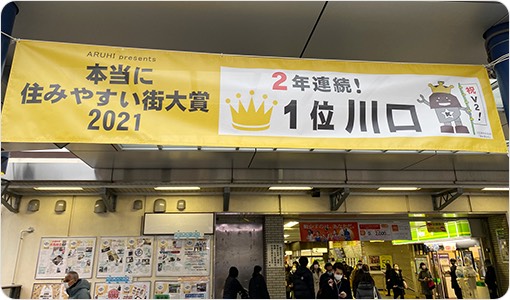
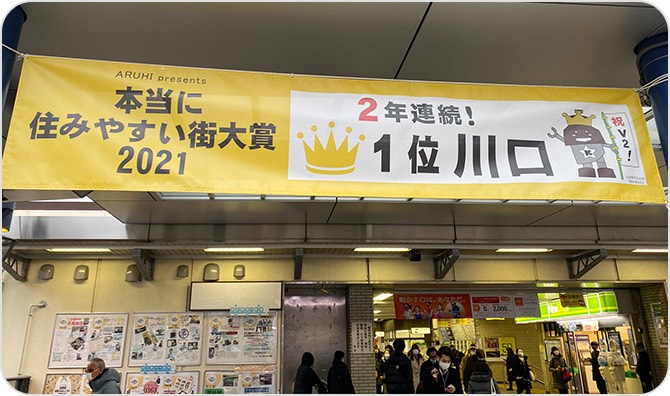
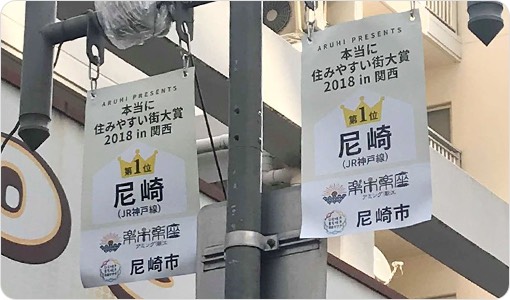
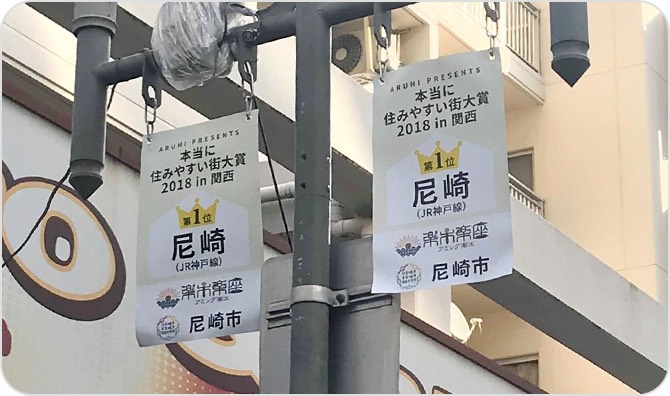
SBI ARUHI collaborates with local governments to promote cities nominated for the “Livable Community Awards”, by indicating nomination with banners, street lamp flags and posters in front of train stations, in shopping areas and at restaurants to enhance the image of the city and foster civic pride. Furthermore, we contribute to further raising awareness of the top ranked towns by partnering with the media to provide exposure of their appeal on television and the Web.
These activities have actually led to the improvement of the community’s name recognition, attention and image. Coupled with various initiatives by local governments, these led increased revenue due to an increase in the appraised value of land and rising population in Kawaguchi, Saitama, and the first increase in population in Amagasaki, Hyogo in nine years, helping to stimulate local communities.
Distributing information through owned media
“Home and Money Wisdom”
Home and Money Wisdom is a web media that provides useful information to help people achieve a better life by carefully selecting trustworthy information on topics related to "home" and "money".

“SBI Home & Money for Seniors”
SBI Home & Money for Senior’s mission is to “Create a society where people can lead enriched lives by using their homes and money wisely and joyfully.” To achieve this, we deliver content such as YouTube videos and columns and feature services tailored for people aged 60 and over.

ARUHI Awards, short film
Suggesting fulfilling housing and living
SBI ARUHI helps create a society where people can enjoy fulfilling housing and living.
Collaborating with BOOK SHORTS, which invites submissions of short stories as a part of Short Shorts Film Festival & Asia (SSFF & Asia), one of the largest of its kind in Asia, SBI ARUHI organized ARUHI Awards and ARUHI Awards 2022, calling for stories on new life, home, and other life-related subjects.
Excellent works that describe diverse lives at home were featured to help people find ideal housing and living for them.
Finding and supporting creators
Through the call for short stories project, SBI ARUHI produced two movies: Otanjobi omedeto (Happy Birthday, 2020) and Ore no umi (My Sea, 2021).(The viewing period for the short film has ended)
Short stories were submitted by people of all ages from teens through the 80s from across Japan, among which excellent works were published. This helped find new creators while providing selected young directors with the opportunity to produce short films and showcase their works.
SBI ARUHI will continue its cultural contribution activities, including support for young creators through various projects.
ARUHI Awards(2019)
- Overview of the event (Japanese text only)
- https://bookshorts.jp/aruhi_award/
ARUHI Awards(2022)
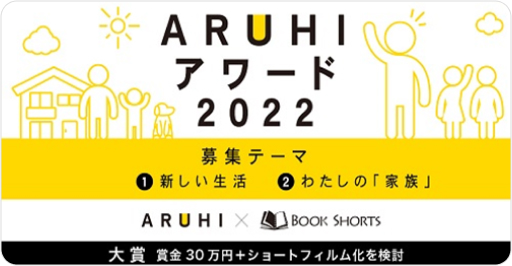
- Overview of the event (Japanese text only)
- https://bookshorts.jp/aruhi_award_2022
short film “Otanjobi-omedetou(Happy Birthday)”(2020)
short film “Ore-no-umi(My Sea)”(2021)
- * The viewing period for the short film has ended.
Social contribution activity through “Orange Ribbon Campaign”
Orange Ribbon Movement is a civil society movement calling for action to eliminate child abuse by spreading orange ribbons as a symbol of child abuse prevention.
SBI Group runs the “Orange Ribbon Campaign” in November, which is designated as “Autumn Children-Centered Month” by the Children and Families Agency, Japan, to help children become self-sufficient and to enrich and improve child welfare.
As a member of SBI Group, SBI ARUHI endorses the “Orange Ribbon Campaign”, encouraging its executives and employees to purchase Orange Ribbon items and actively join the Orange Ribbon Movement. In 2025, the total purchase amount for Orange Ribbon items across the SBI ARUHI Group reached approximately 130,000 yen.

Japanese text only
Building a friendly and rewarding workplace that empowers all employees
Based on the concept of work-life blend, which harmonizes personal and professional activities as equal life events, we support employees from diverse backgrounds in demonstrating their full strengths, allowing them to work for many years with peace of mind while maintaining diverse lifestyles.
We have implemented the following initiatives as key measures:
- Build an environment where employees can efficiently balance their personal and professional lives by introducing a flex-time program without core hours (*1), providing a reduced work schedule for those who are raising children (up to the sixth grade of elementary school), and offering parental leave of up to three years
- Implement a telework program (*2) to propose new ways of working to employees tailored to their diversifying lifestyles, and support flexible workstyles by providing a flexible work allowance
- Provide growth support that helps employees voluntarily take on challenges and proactively and autonomously achieve their goals by introducing the "Career Open Program," which allows employees to apply for positions in other departments within the Company or at SBI ARUHI Group companies without prior reporting to their supervisors, and the "Career Plan Sheet," which enables them to share their career vision and goals with their supervisors and the HR department
- Implement a qualification acquisition support program to promote employees' personal skill development, motivation, and career growth
- Conduct a monthly survey of all employees to regularly assess workplace satisfaction, engagement, and other factors
- Establish a retirement age of 65 and a re-employment system up to the age of 70, aiming to respond to the willingness to work of senior employees and drive skill transfer to younger employees
- Offer a reassuring work environment by introducing a long-term income protection insurance program to compensate for a certain level of income until the age of 65 for employees whose employment becomes difficult due to illness or injury, and by establishing paid sick leave for long-term treatment due to non-work related illness and injury (for 60 consecutive days regardless of length of service after the probation period; limited to once per instance)
Promoting Diversity, Equity and Inclusion (DE&I)
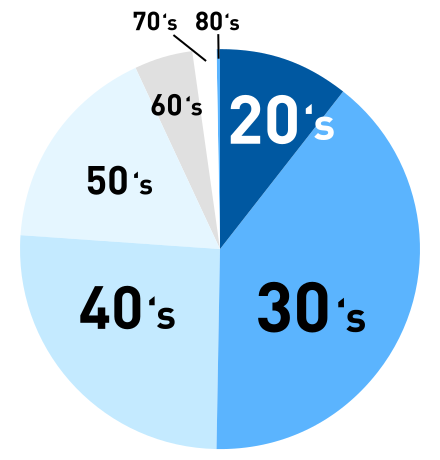
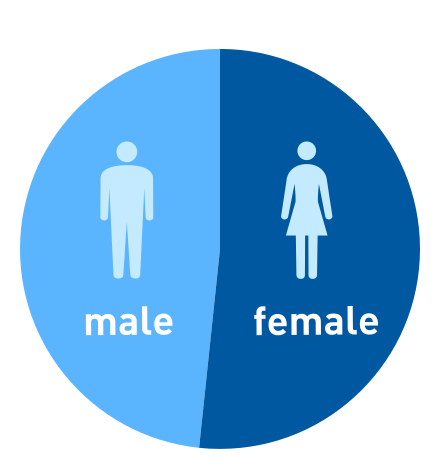
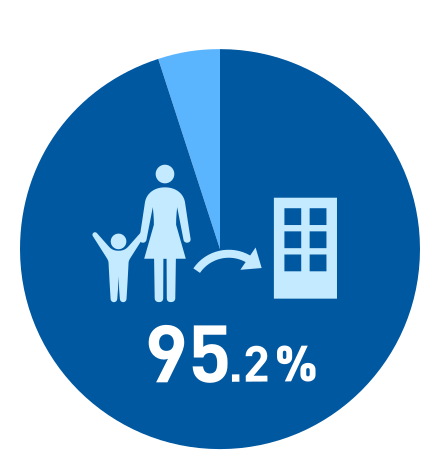
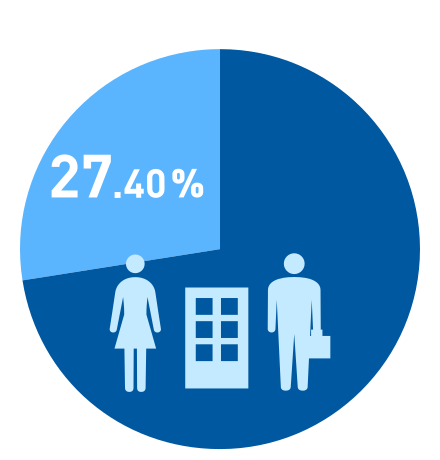
The average age of our employees is 42.9, with a diverse workforce spanning from new graduates to senior employees. In addition, our gender balance shows that women represent 54.5% of our workforce and the share of female managers is 28.4%, demonstrating that SBI ARUHI offers broad opportunities regardless of gender. Furthermore, we are working to create an environment where employees can feel secure continuing to work after having a child, through initiatives such as managing a working parent community (an internal community for employees working while raising children to connect, exchange information, consult, and support one another). As a result, the return-to work after parental or maternity leave is 92.3%.
In October 2022, we created a guidebook about maternity and parental leave, which has been shared within our company. This is aimed at helping employees better understand maternity and parental leave, while also working to improve the rate of male employees taking parental leave, resulting in a 100% parental leave take-up rate among them in FY2025.
The Company has also defined the “General Employer Action Plan” in accordance with the Act on the Promotion of Women's Active Engagement in Professional Life (*4) and the Act on Advancement of Measures to Support Raising Next-Generation Children (*5) as part of its effort to build and expand a foundation for empowering and driving the growth of employees. In this Action Plan, we have set a goal for the share of female managers to be one-third or more from FY2026 onwards. To achieve this goal, we offer training to support diverse career development and build an environment where employees are encouraged to take annual paid leave and achieve a good work-life balance.
The Company will continue working to build an environment where employees feel free to take parental leave. We will also aim to realize “a friendly and rewarding workplace that empowers all employees,” regardless of gender, age, and lifestyle, by addressing “barriers to work” (factors that hinder people from working due to pregnancy, childbirth, childrearing, nursing care, etc.).
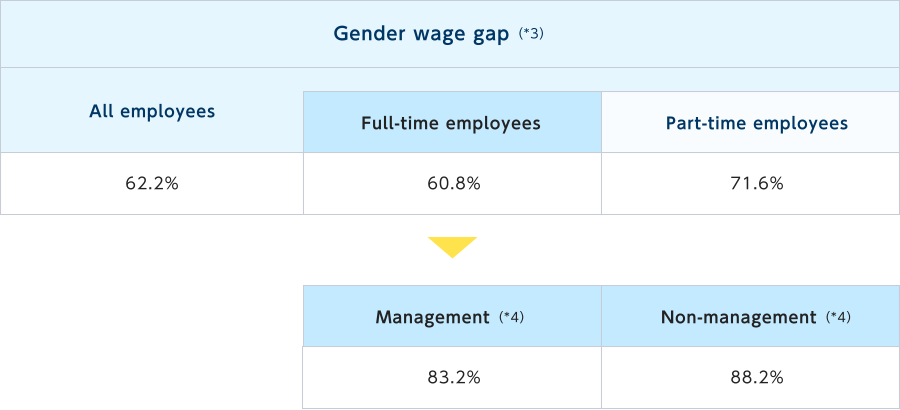
Background on the Gender Wage Difference and Our Initiatives
Among full-time employees at SBI ARUHI, women’s average wage stands at 67.1% of men’s. As background factors, more than half of our employees are women, and many employees are on maternity leave or parental leave, or utilize shorter working hours after returning to work. In addition, while men represent a higher percentage of the management layer, women represent a larger portion among non-management positions, which also contributes to the wage difference.
The Company has adopted a “role grade system” in which length of service, gender, and age are not included in the evaluation for determining their grades and wages. Furthermore, when excluding employees on maternity or parental leave, etc., women’s average wage stands at 91.4% of men’s for management layer and 86.3% for non-management positions. The Company will continue to address unconscious bias regarding gender and age, and build an environment where diverse talent can thrive.
Initiatives for Creating a Friendly Work Environment
As part of its efforts to reduce employee turnover, SBI ARUHI's HR team conducts exit interviews for departing employees. We hear from them about the workplace environment and reasons for leaving, and provide feedback to the respective divisions to improve the work environment.
Our management team is informed of overtime hours and the annual paid leave utilization rate at each division on a monthly basis, and we work to reduce overtime and encourage employees to take annual paid leave.
In the “General Employer Action Plan” we developed in accordance with the Act on the Promotion of Women's Active Engagement in Professional Life and the Act on Advancement of Measures to Support Raising Next-Generation Children, we set our FY2026 goal for the annual paid leave utilization rate at 80.0% or higher, and promote taking long-term leave of five or more consecutive days.
Furthermore, we are promoting "Health and Productivity Management" to encourage healthy lifestyles among employees and enhance productivity and motivation. As part of this effort, we have been holding a four-week walking event once a year as an in-house ESG activity since FY2023.
| FY2021 | FY2022 | FY2023 | FY2024 | FY2025 | FY2026 (Target) |
|
|---|---|---|---|---|---|---|
| rate of turnover |
FY2021
6.7%
|
FY2022
10.0%
|
FY2023
13.7%
|
FY2024
18.0%
|
FY2025
11.0%
|
FY2026(Target)
-
|
| Average overtime hours (per month)(*8) |
FY2021
25h24min
|
FY2022
26h05min
|
FY2023
23h29min
|
FY2024
22h50min
|
FY2025
27h06min
|
FY2026(Target)
-
|
| Annual holiday days |
FY2021
121days
|
FY2022
120days
|
FY2023
122days
|
FY2024
121days
|
FY2025
121days
|
FY2026(Target)
-
|
| Rate of taking annual paid leave |
FY2021
76.7%
|
FY2022
77.1%
|
FY2023
78.5%
|
FY2024
74.1%
|
FY2025
68.1%
|
FY2026(Target)
≥80.0%
|
| Ratio of female managers |
FY2021
22.97%
|
FY2022
20.93%
|
FY2023
27.40%
|
FY2024
32.9%
|
FY2025
28.4%
|
FY2026(Target)
≥33.3%
|
HR system
For its HR system, SBI ARUHI has adopted a “role grade system” where employees' job type, age, gender, or length of service are not included in their evaluation. This provides clarity on requirements for promotion as their grades are determined based on roles and capabilities they have demonstrated. In addition, we work to create career development opportunities through initiatives such as conducting periodic one-on-one meetings.
Recruitment
In addition to hiring people through recruitment agencies and job media, we are promoting employee referrals under which existing employees recommend candidates who are a good fit for the Company. We offer opportunities for casual interviews before official screening to frankly share with candidates the Company's appeal and culture, thereby increasing their willingness to apply. Furthermore, as part of our policy to hire diverse talent, we welcome non-Japanese employees and employees with disabilities, who are actively working in diverse fields.
To meet a wide range of human resource needs driven by future business expansion, we will continue to promote flexible hiring regardless of attributes and strive to build a highly diverse organization.
Talent development
SBI ARUHI believes that the driving force behind achieving the goals of our “Medium-term Strategic Plan 2025”—such as securing an “Overwhelming No.1 market share in Flat 35,” “Investing in growth areas,” and reaching “Stock revenues exceeding 50%”—is autonomous talent capable of thinking and acting on their own. Therefore, with the aims of improving the problem-solving capabilities of both individuals and the organization and maintaining organizational transparency, we are accelerating our investment in human capital.
With the objective of evolving the management layer, which is the cornerstone of organizational operations, we conduct coaching training by external instructors for all managers who serve as organizational connecting points, working to enhance problem-solving and management capabilities across the entire team. We are also working to support mid-career hires in becoming productive early on and to support the career development of all employees. In addition to communication through one-on-one meetings, we are enhancing psychological safety in the workplace and expanding opportunities for practical, hands-on learning.
Going forward, while accommodating diverse lifestyles, we will continue to create an environment that brings out the initiative of each employee and aim to enhance corporate value by building a flexible and resilient organization.
- Measures and data at SBI ARUHI Corporation as of March 31, 2026 (non-consolidated / including those on secondment to subsidiaries). The age groups, gender balance, share of female managers, and annual paid leave utilization rate are for the entire Group, including subsidiaries.
- *1 Applicable to employees who meet the conditions specified in the regulations.
- *2 Subject to assigned duties, individual circumstances, etc. / Prior application required.
- *3 The share of female managers since the period ended July 2025 represents the percentage among managers and supervisors as defined by the Company.
- *4 The Act came into effect on April 1, 2016 to empower women and help them demonstrate their capabilities in the workplace.
- *5 This is a law that was enacted in July 2003 with the aim of realizing a society where children who will lead the next generation are born and raised in a healthy manner.
- *6 Calculation method: women's average annual wage ÷ men's average annual wage × 100 (Target period: April 1, 2025 - March 31, 2026)
- *7 Excludes users of maternity leave, parental leave, or shorter working hours as of March 31, 2026.
- *8 Average overtime hours per month calculated based on results from January 1 to December 31 in each year.
SBI ARUHI’s Human Rights Initiatives
SBI ARUHI Human Rights Policy
SBI ARUHI recognizes respect for human rights of stakeholders as an important issue in our business activities and establishes “SBI ARUHI Human Rights Policy” in order to fulfill our responsibility to promote respect for human rights.
1Expectations toward Stakeholders
This Policy applies to all officers and employees (including contract workers and temporary workers) of SBI ARUHI and its affiliated companies. The Company also expects that its business partners and other concerned parties comply with this Policy.
2Support and Respect for International Code and Standards regarding Human Rights
SBI ARUHI supports “the Declaration on Fundamental Principles and Rights at Work” of both International Bill of Human Rights and the International Labour Organization (ILO), and respects for human rights in accordance with “the Guiding Principles on Business and Human Rights” of the United Nations (UN).
3Dialogue and Discussion with Stakeholders
In its commitment to human rights due diligence, SBI ARUHI utilizes specialized knowledge regarding human rights from independent outside sources as well as dialogues and discusses sincerely with stakeholders on whom such commitment may have potential impact.
4Human Rights Due Diligence
In accordance with “the UN Guiding Principles on Business and Human Rights,” SBI ARUHI performs human rights due diligence in order to identify risks of human rights, attempt to prevent and mitigate such risks, and achieve accountability for these activities.
5Relief and/or Rectification
If it is revealed that SBI ARUHI’s business activities have caused or been involved in negative impact on human rights, the Company will make efforts to rectify such impact through appropriate procedure and dialogue.
6Recognition of Freedom of Association and Right to Collective Bargaining
SBI ARUHI respects freedom of forming a labor union and right to collective bargaining, and supports promotion of problem resolution through dialogue between labor and management.
7Prohibition of Forced Labor and Child Labor
From the viewpoint of protecting fundamental human rights, SBI ARUHI prohibits any and all forced labor and child labor pursuant to the laws and regulations and performs business activities in compliance with the laws and regulations.
8Elimination of Discrimination
In our all business activities, SBI ARUHI respects fundamental human rights and does not discriminate on the basis of race, nationality, gender, age, origin, line of descent (family origin), social status, belief, religion, physical features, disability or not, sexual orientation, gender identity, and pregnancy.
9Ensuring mental and physical health and safety
SBI ARUHI provides a work environment where the mental and physical health and safety of employees are protected through appropriate safety and health management.
10Education and Awareness Raising
SBI ARUHI provides proper education to all of its officers and employees (including contract workers and temporary workers) about this Policy and commits to raise awareness of human rights.
11Governance and Management System
SBI ARUHI Human Rights Policy is determined, considered regularly whether or not its review is necessary, and reviewed if necessary by the Board of Directors. Its commitment to human rights are reviewed regularly by the ESG committee and such contents are reported to the Board of Directors.
Human Rights Due Diligence
SBI ARUHI endeavors to identify the negative impact (risks) of business activities on human rights, and attempts to prevent and mitigate such risks in accordance with “the UN Guiding Principles on Business and Human Rights” from the perspective of respecting internationally recognized human rights. Furthermore, we also continuously review the Human Rights Policy and initiatives based on lessons learned through communication with stakeholders and measures taken to prevent and mitigate risks to human rights.
Development of Remedial Measures
We have established a Whistleblower system as a contact point where officers and employees (including retired employees) of the Company and its subsidiaries, as well as officers and employees (including retired employees) of franchisees, can consult if they observe a situation in which their human rights have been violated or a situation that may encourage human rights violations. Furthermore, we have established the “Customer Relations Office” as a system to appropriately respond to opinions and requests, including human rights issues, from customers and other stakeholders. If it becomes clear that the Company’s officers and employees or the products and services the Company provides have caused or been involved in human rights violations, we will take appropriate action to remedy and rectify the situation.
Human Rights Training and Awareness Raising
In order to fulfill the responsibility to respect human rights in all business activities in accordance with the Human Rights Policy, we are working to inform officers, employees, business partners, and other stakeholders of the importance of respecting human rights.
Furthermore, we are also engaged in human rights awareness activities within the Company by conducting training on basic knowledge of human rights and harassment (sexual harassment, power harassment, and maternity harassment) and preventive measures through e-learning.